
Did you know that handing over the keys to a private buyer without a current $102.70 safety certificate could lead to more than just a headache? Selling a car in QLD often feels like a full-time job. You're likely juggling the confusion of RWC rules, the fear of being lowballed by dealers, and the stress of managing constant private inspections. It's a lot to handle when you just want a fair price and a clear driveway.
We understand that you want a legal, compliant sale without the typical drama. This guide helps you master the latest 2026 legal requirements and discover the fastest way to turn any vehicle into cash across Queensland, from Brisbane to Toowoomba. We walk you through the current Department of Transport and Main Roads (TMR) fees, explain how to avoid the RWC process entirely, and show you the path to same-day removal for unwanted vehicles. Whether you're selling a reliable family SUV or a damaged truck, you'll find the most efficient route to a successful sale right here.
Key Takeaways
- Learn how to navigate the 2026 TMR legal requirements and the $102.70 Safety Certificate fee to keep your sale fully compliant.
- Compare the true costs of private listings against professional removals to decide which method of selling a car in qld fits your schedule.
- Master the TMR online portal to complete registration transfers instantly and protect yourself from future liabilities or traffic fines.
- Identify the simple preparation steps and service history documents that build buyer trust and help you secure a better price.
- Discover why selling damaged vehicles to a licensed wrecker is the fastest solution, as it bypasses the need for a costly Safety Certificate.
Navigating Queensland's Car Selling Laws and Paperwork
The process of selling a car in qld is governed by the Department of Transport and Main Roads (TMR). Their 2026 regulations focus on road safety and consumer protection, ensuring that every vehicle on the road meets minimum standards. A central part of this system is the formal transfer of ownership, which requires specific documentation to change hands legally. If you're planning a private sale, you can't simply hand over the keys and a receipt. You must follow a structured path to avoid fines and ensure the buyer can legally register the car in their name.
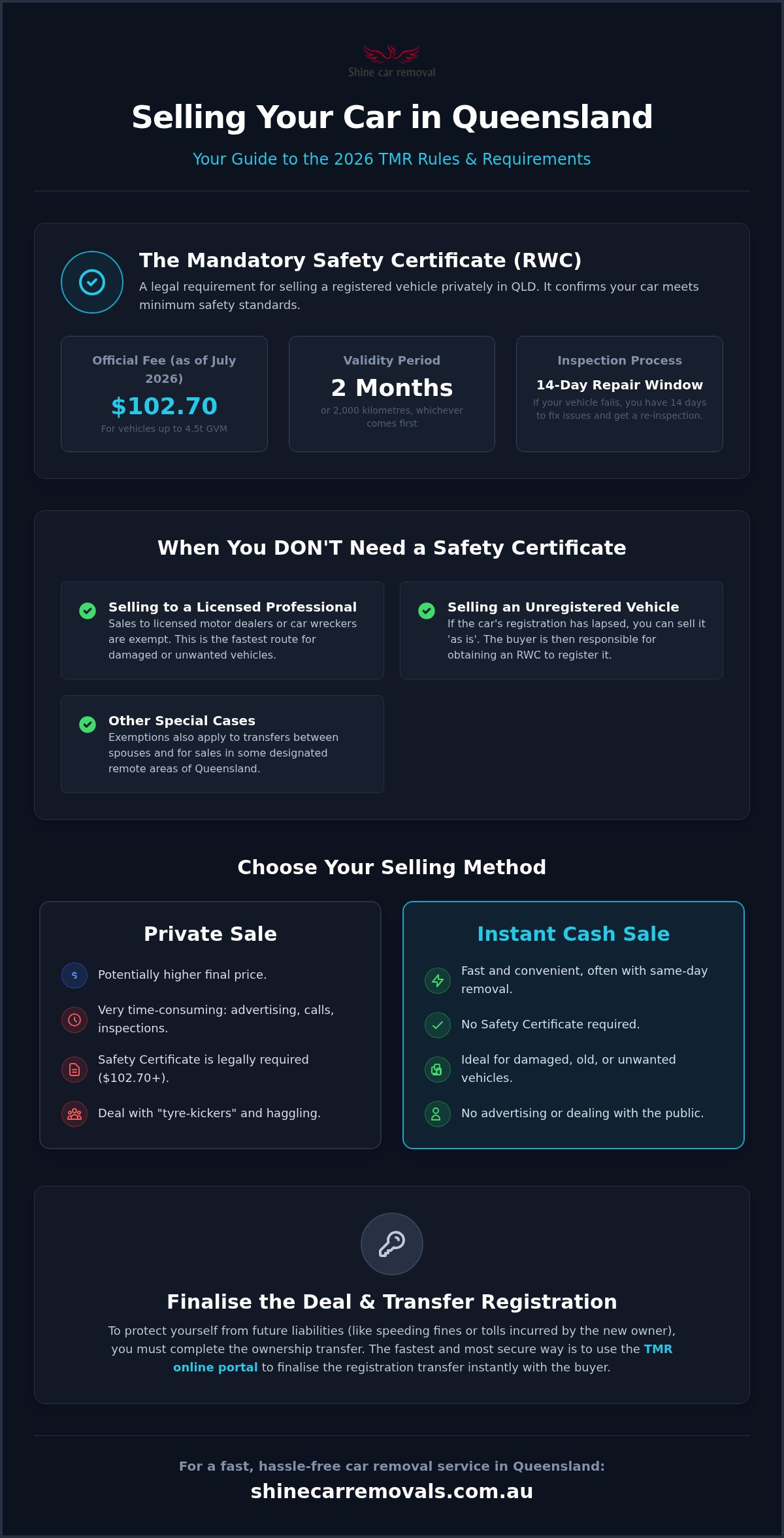
A Safety Certificate is a mandatory document for registered private sales in QLD. This document confirms that the vehicle meets basic safety standards for components like tyres, brakes, steering, suspension, and lights. It is the seller's legal responsibility to obtain and pay for this certificate before listing the car for sale. If you advertise a registered vehicle without one, you risk receiving an on-the-spot fine from TMR inspectors, even if you haven't found a buyer yet.
The Safety Certificate (RWC) Explained
To get your certificate, you must visit an Approved Inspection Station (AIS). These are local mechanical workshops authorised by the government to perform safety checks. As of July 2026, the standard fee for a vehicle up to 4.5t GVM is $102.70. If your car passes, you'll receive a certificate that remains valid for two months or 2,000 kilometres, whichever comes first. This gives you a decent window to finalise your sale while the paperwork is still current.
If your vehicle fails the inspection, you have a 14-day repair window to fix the identified issues. Once the repairs are completed, you return the car to the same AIS for a re-inspection. Modern certificates are often digital, meaning TMR receives the data automatically and you'll get a copy via email or SMS. If you receive a paper certificate, you must display it in a prominent place, such as the windscreen or side window, while the car is offered for sale.
Exemptions to the RWC Rule
There are specific scenarios where you don't need a Safety Certificate. The most common exemption applies when you are selling to a licensed motor dealer or a specialised wrecker. This is a significant advantage for those selling a car in qld that might not pass a roadworthy test without expensive repairs. You can also sell a vehicle without an RWC if it is unregistered at the time of sale. In this case, the buyer will need to obtain their own certificate if they wish to register it later.
Other exemptions exist for transfers between spouses or for vehicles located in specific remote areas where access to an AIS is limited. If you're selling a car "as is, where is" for parts or scrap, disposing of it through a professional removal service bypasses the RWC requirement entirely. This allows you to clear your property and get paid without the stress of mechanical inspections or costly repair bills.
Private Sale vs. Instant Cash: Choosing Your Best Method
Deciding how to approach selling a car in qld usually comes down to a trade-off between time and money. While listing your vehicle on platforms like Carsales or Facebook Marketplace can sometimes fetch a higher headline price, it requires a significant investment of effort. You'll need to handle the photography, write compelling descriptions, and manage the inevitable influx of enquiries. For near-new vehicles with low kilometres and a perfect service history, this effort often pays off. However, for older or less-than-perfect cars, the "time-cost" of private selling can quickly erode your potential profits.
Hidden costs are the silent killers of private sale margins. Beyond the $102.70 Safety Certificate fee, you may need to pay for professional detailing to make the car presentable and premium listing fees to stand out in a crowded market. When you factor in the value of your own time spent waiting for buyers who may never show up, the gap between a private sale and an instant cash offer starts to close. Matching your vehicle's condition to the right method is essential for a stress-free experience.
The Reality of Private Selling in QLD
Managing inspections is often the most draining part of the process. You'll likely encounter "tyre-kickers" who have no intention of buying but want to spend an hour poking around your engine bay. Safety is another critical consideration. When meeting potential buyers in busy areas like Brisbane or the Gold Coast, it's wise to arrange viewings during daylight hours and have a friend or family member present. Always verify a buyer's driver's licence before allowing a test drive to ensure you're protected if something goes wrong on the road.
Negotiation can also be confrontational. Many buyers will attempt to "lowball" you by pointing out minor cosmetic flaws to justify a lower price. If you aren't comfortable with firm haggling, the private market can feel quite aggressive. It's important to have a clear "walk-away" price in mind before you start the process.
Benefits of Professional Car Removal
For those prioritising speed and ease, car removal services offer a seamless alternative. This method is particularly effective for vehicles that are damaged, old, or no longer running. Instead of spending weeks trying to find a buyer who is willing to take on a "project" car, you can finalise the deal in a single day. Many Queenslanders find that a professional car removal service provides the best balance of fairness and efficiency.
- Rapid Turnaround: You can often turn an unwanted vehicle into cash in under 24 hours, clearing your driveway instantly.
- Total Convenience: Most reputable services provide free professional towing, covering a wide service area from Logan up to the Sunshine Coast.
- Any Condition Accepted: Whether your car has a blown head gasket or significant body damage, it still holds value for its parts and recyclable materials.
Choosing this route means you skip the mechanical inspections and the repair bills required for a private sale. It's a straightforward way of selling a car in qld that values your time as much as your vehicle.
Preparing Your Car to Maximise Your Payout
Preparing for selling a car in qld starts with a basic "pre-sale" inspection. You don't need to be a qualified mechanic to spot the small details that influence a buyer's confidence. Walk around the vehicle and check for minor issues like blown globes, low tyre pressure, or chipped paint that you can easily touch up. Check the fluid levels under the bonnet and ensure there are no obvious leaks. While these might seem like small things, they demonstrate that the car has been maintained with care, which often justifies a firmer asking price.
Gather every receipt, invoice, and logbook entry you have into a tidy folder. A complete service history is a powerful tool for building trust with a stranger. It transforms your vehicle from a mystery into a well-documented asset. To find a realistic starting point for your price, use Australian valuation tools like RedBook or Glass's Guide to see what similar models are fetching in the current market. A clean interior can influence a private buyer’s perception of mechanical reliability, as it suggests the vehicle has been treated with respect throughout its life.
Cleaning and Detailing for Private Sales
First impressions are everything when you list a vehicle online. While a basic wash is the minimum requirement, a professional detail can often pay for itself by attracting serious buyers much faster. Focus on the "kerb appeal" by ensuring the wheels are free of brake dust and the paint has a decent shine. Don't forget to remove all personal items from the glovebox and centre console. It's also vital to clear your E-toll tag from the windscreen to avoid being charged for the new owner's trips on the Gateway Bridge. When taking photos, choose a clear, well-lit area like a local park and capture every angle, including the dashboard and tyre tread depth.
Valuation Tips for Unwanted or Scrap Cars
If your vehicle is past its prime or no longer roadworthy, your valuation strategy shifts from aesthetics to raw materials. You should research current scrap car rates to understand the base value of the steel and aluminium. In Queensland, 4WDs and heavy trucks often fetch higher cash prices because they contain more recyclable metal and high-demand spare parts for the secondary market. If you are unsure about the potential value of a non-runner, asking How much is my car worth? through a professional evaluator can give you a realistic figure. Preparing for selling a car in qld means knowing whether you are selling a driving machine or a collection of valuable materials.
How to Transfer Registration and Finalise the Deal
Once you've found a buyer, the final administrative steps are crucial for protecting your interests. In the past, selling a car in qld required a physical trip to a Department of Transport and Main Roads (TMR) service centre. Today, the process is significantly faster thanks to the TMR online transfer portal. Whether you are in the heart of Brisbane, the suburbs of Logan, or a rural property near Toowoomba, you can lodge the transfer from your smartphone or computer. While the buyer technically has 14 days to lodge the transfer and pay the $33.65 fee, you should lodge your part of the paperwork immediately. This ensures you aren't held liable for the buyer’s future speeding fines, red-light camera offences, or parking tickets.
A formal Bill of Sale acts as your primary legal receipt. It must include the date of sale, the final sale price, the vehicle’s VIN, and the full names and signatures of both parties. This document is your ultimate proof that ownership has changed hands. Don't forget to contact your insurance provider to cancel or transfer your policy as soon as the vehicle leaves your driveway. You should also update your toll account. If you're frequently using the Ipswich Motorway or the Gateway Bridge, failing to remove the vehicle from your account could result in you paying for the new owner's daily commutes.
Completing the Paperwork Correctl
The primary document for this transaction is the "Transfer of Vehicle Registration" form (F3520). You'll need to provide the buyer with the unique certificate number from your Safety Certificate (RWC) to complete the online lodgement process. If you've decided to sell the vehicle unregistered, you must remove the number plates and return them to a TMR service centre. This is a common requirement for residents in Ipswich or the Gold Coast when disposing of a vehicle that is no longer roadworthy. Returning the plates allows you to apply for a pro-rata refund on any remaining registration credit, putting a little extra money back in your pocket.
Secure Payment Methods in Australia
Payment security is a major concern when selling a car in qld. In the modern Australian banking landscape, PayID and OSKO are the preferred methods for private transactions. These systems allow for near-instant bank transfers between different institutions, meaning you can verify the funds in your account before the buyer drives away. Avoid accepting personal cheques or vague "promises to pay," as these carry a high risk of fraud. For those opting for a professional removal, receiving cash on the spot remains the gold standard for security and peace of mind.
If you're looking for a guaranteed transaction without the paperwork stress, you can get an instant quote for your vehicle and let the experts handle the heavy lifting. This ensures a clean break from the vehicle and immediate payment without the usual 14-day waiting period for registration transfers to be processed.
The Easiest Way to Sell Damaged or Unwanted Cars in QLD
If your vehicle fails its Safety Certificate inspection and the repair bill exceeds the car's market value, you aren't stuck with a driveway ornament. Selling a car in qld doesn't always have to involve a private buyer or a stressful trade-in negotiation. For non-runners, accident-damaged vehicles, or aging cars that are simply too expensive to maintain, a damaged car removal service is often the most practical solution. By choosing a licensed motor dealer or wrecker, you bypass the legal requirement for a roadworthy certificate entirely, allowing you to settle the sale "as is" without spending another cent on mechanical work.
Shine Car Removal provides a seamless alternative for residents across South East Queensland. We service a vast region stretching from the heights of Toowoomba down to the Gold Coast and up to the Sunshine Coast. Our team specialises in turning unwanted vehicles into instant cash on the spot, providing a stress-free experience that respects your time. Before the tow truck arrives, ensure you've completed a final sweep for personal items, removed your number plates, and have your photo ID ready to finalise the transaction.
Eco-Friendly Scrapping Practices
Choosing a professional removal service isn't just about convenience; it's also a responsible choice for the environment. Ethical wreckers play a vital role in the Australian circular economy by ensuring that every part of a vehicle is handled correctly. This process begins with professional de-pollution, where hazardous fluids like engine oil, coolant, and brake fluid are drained and recycled to prevent soil and waterway contamination. Batteries and tyres, which are notoriously difficult to dispose of, are sent to specialised facilities for processing.
- Fluid Recovery: Safely extracting oils and fuels for refining and reuse.
- Parts Salvaging: Identifying high-quality spare parts to keep other vehicles on the road, reducing the energy needed for new manufacturing.
- Metal Recycling: Crushing and melting the remaining chassis to reclaim steel and aluminium, significantly reducing landfill waste.
Ready to Sell? The Shine Car Removal Process
Getting started is straightforward and takes only a few minutes. You can request an instant quote for your car in Brisbane or any surrounding suburb. Once you accept the offer, we organise a free pickup from your home or business in Ipswich, Logan, or the Gold Coast at a time that suits your schedule. Our professional drivers handle the heavy lifting and the towing, so you don't have to worry about the logistics of moving a non-running vehicle.
When we arrive, the finalisation of the deal is brisk and transparent. We'll check your proof of identity, confirm the vehicle details, and provide your instant cash payment before the car is loaded onto the truck. This modern, solution-focused approach to selling a car in qld ensures that even the most unwanted junk vehicle can be cleared from your property with total peace of mind.
Clear Your Driveway and Get Paid Today
Successfully selling a car in qld requires a clear strategy, whether you're navigating the private market or opting for a rapid removal. By mastering the 2026 TMR requirements and preparing your documentation early, you ensure a compliant transfer that protects you from future liabilities. While private sales offer potential for higher returns on near-new vehicles, the convenience of professional removal is unmatched for older or damaged cars that would otherwise require costly repairs to pass a safety inspection.
If you're ready to skip the stress of inspections and mechanical bills, Shine Car Removal is your reliable partner. We pay top cash for all vehicle types and provide free professional towing across South East QLD, from Toowoomba to the coast. You can even enjoy same-day service in Brisbane and the Gold Coast to turn that unwanted vehicle into money in the bank before the sun sets.
Get a Free Instant Quote from Shine Car Removal Today and experience the most straightforward way to finalise your sale. You now have the knowledge to move forward with confidence, so take the first step toward a clear driveway today.
Frequently Asked Questions
Do I need a roadworthy certificate to sell my car privately in QLD?
Yes, you generally need a current Safety Certificate before you even list a registered vehicle for a private sale. This document confirms your car meets minimum safety standards for components like brakes and tyres. However, you don't need one if you are selling to a licensed motor dealer or a specialist wrecker for scrap. This makes selling a car in qld much faster if the vehicle is damaged or unlikely to pass an inspection.
Can I sell a car in QLD if it is currently unregistered?
You can certainly sell an unregistered vehicle in Queensland. In this scenario, you aren't legally required to provide a Safety Certificate to the buyer. It is vital to remove the number plates and return them to a Department of Transport and Main Roads service centre before the handover. This allows you to claim a pro-rata refund on any remaining registration credit and ensures you aren't liable for any future toll charges or fines.
What paperwork do I need to give the buyer when selling my car?
When finalising a private sale, you must provide the buyer with a current Safety Certificate if the car is registered. You should also hand over a signed "Transfer of Vehicle Registration" form and a formal Bill of Sale. This receipt should clearly state the date, sale price, and vehicle identification number. Providing these documents ensures the buyer can complete the transfer through the TMR portal without any administrative delays or legal complications.
How do I transfer my car registration online in Queensland?
You can complete the transfer through the official TMR online portal by entering the vehicle details and the buyer’s information. Both parties must confirm the transaction digitally to finalise the process. You will need the unique number from your electronic Safety Certificate to lodge the application successfully. This modern system is available across Brisbane and the Gold Coast, allowing you to settle the paperwork instantly from your home or office without visiting a service centre.
Is it better to sell my car to a dealer or a private buyer?
Choosing between a dealer and a private buyer depends on whether you value top dollar or total convenience. Private sales often fetch a higher price but require significant time for inspections and mechanical repairs. Selling to a professional removal service like Shine Car Removal is often the best choice for older or damaged vehicles. We provide free towing from Logan to the Sunshine Coast and pay instant cash on the spot without requiring a roadworthy.
What happens to my insurance and rego after I sell my car?
Your insurance policy should be cancelled or transferred to your new vehicle as soon as the sale is finalised. Registration typically stays with the vehicle unless you've sold it unregistered. Always remember to remove the vehicle from your Linkt or E-toll account to avoid paying for the new owner's trips on the Gateway Bridge. Taking these steps ensures a clean break from the vehicle and prevents any unexpected charges or legal liabilities.
Can I sell a car that has a finance payout still owing?
You can sell a vehicle with outstanding finance, but the debt must be cleared before the title can legally transfer. Most buyers or dealers will require a "payout letter" from your lender. They then pay the finance company directly and give you any remaining balance in cash. This process ensures the encumbrance is removed from the Personal Property Securities Register (PPSR), giving the new owner total peace of mind that the car is debt-free.
Who pays the transfer fees when a car is sold in QLD?
The buyer is responsible for paying the registration transfer fee and any applicable vehicle registration duty to TMR. These costs must be paid within 14 days of the sale date. As the seller, your main financial obligation is obtaining the Safety Certificate, which costs $102.70 as of July 2026. Clarifying these responsibilities early in the negotiation helps avoid confusion and ensures a smooth handover for both parties involved in the transaction.


